
Cold Coffee, Iced Coffee, Cold Brew… What's the Difference?
Cold coffee has become a standard part of foodservice beverage menus. Cold coffee, like hot coffee, can be prepared in several ways, with some methods suited for fast, low-labor service during busy rushes, while others are better suited to premium menus built around flavor and customization. When deciding which type of cold coffee to serve, the best fit usually comes down to prep time, equipment, staff involvement, and the kind of beverage experience you want to offer.
What Is Cold Coffee?
"Cold coffee" is the broad term for coffee served chilled rather than hot, including iced coffee, cold brew, bottled coffee beverages stored in refrigerators, and some concentrate-based coffees. The term covers multiple preparation methods, making it useful for menu planning. However, when choosing brewing equipment, the term is less useful than specific terms like “iced coffee” or “cold brew,” as these refer to a specific type of cold coffee.
What Is Iced Coffee?
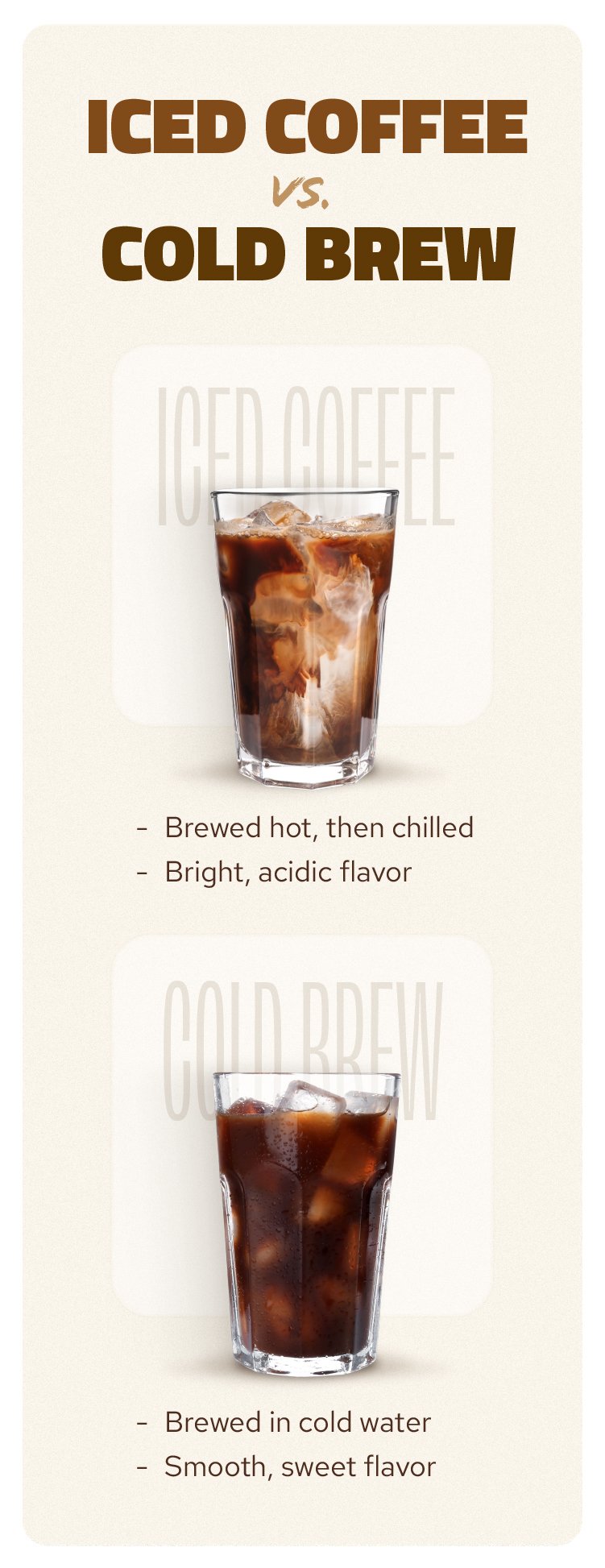
Iced coffee is brewed hot coffee that is dispensed over ice; it can be allowed to cool first or can be poured directly after brewing for a flash chilling effect. For many operators, iced coffee is the most accessible form of chilled coffee because it can often be made with existing equipment. Rather than investing in new equipment, staff can use a standard brewer, a server or dispenser, and an ice machine.
An iced coffee setup typically includes:
- A commercial coffee brewer or iced coffee machine
- Servers, decanters, or dispensers
- A reliable ice supply
What Is Cold Brew?
Cold brew is coffee steeped in cold water for 10 to 24 hours, then strained and served chilled. This slower extraction process is the main difference between cold brew and iced coffee, and cold brew is better suited for operations seeking a more premium coffee option. When comparing the flavor profile of cold brew vs. coffee, the cold brew method produces a smoother, less acidic drink, while regular coffee, including iced versions, is always brewed hot, resulting in a bright and slightly bitter traditional coffee flavor.
A cold brew setup typically includes:
- A Cold brew coffee brewer
- A Cold brew coffee dispenser
- Nitrogen equipment for nitro cold brew
Iced Coffee vs. Cold Brew
Brewing Method
The biggest difference between iced coffee and cold brew is in how the coffee is extracted. Iced coffee begins as hot-brewed coffee that is cooled before being served over ice; cold brew is steeped with cold water and never contacts hot water. To put it simply: one is brewed hot and served cold, while the other is brewed cold and served cold. Additionally, cold brew is typically not served with ice, as the coffee itself is already chilled when served.
Prep Time
Cold brew is slower to produce, featuring steep times that can exceed 10 hours. That longer extraction cycle means staff cannot respond to unexpected rush periods with the same flexibility as they can when serving standard brewed coffee. The extra effort associated with cold brew is often worthwhile for operations built around premium beverages, especially when the menu supports draft service, specialty add-ons, or a higher beverage price point. For most restaurants, bakeries, and cafes—especially smaller startups—iced coffee is often the more practical route.
Shelf Life
Iced coffee has the shortest practical window after brewing, as it must be cooled, held, and rotated in compliance with food-safety procedures. Cold brew is often a better make-ahead strategy than standard iced coffee, because it's designed to be brewed in batches, chilled, and held for service using a dispenser setup.
Espresso vs. Cold Brew
A common question is the difference between espresso and cold brew. Espresso is a concentrated hot extraction used in made-to-order drinks such as lattes and americanos. Espresso uses finely ground coffee brewed under high pressure; cold brew uses coarse grounds steeped in cold water.
Although espresso is typically served hot, it can be brewed with cold water. This is often called "cold-pressed espresso". Unlike cold brew, cold-pressed espresso extracts quickly under pressure, producing a smooth and sweet shot of coffee. It's important to note cold brew coffee needs more coffee grounds than espresso, as it uses a higher coffee-to-water ratio. Cold brew typically falls between 1:4 (one part coffee to four equal parts water) and 1:8, while for espresso, the standard ratio is 1:2.
Shop Cold Coffee Equipment at KaTom
KaTom offers equipment for cold and chilled coffee operations, including commercial iced coffee makers for brewed iced coffee service and cold brew equipment for premium cold coffee. Regardless of your chilled coffee goals, KaTom’s catalog includes a wide range of service models and volumes that support a variety of menu strategies.
