How to Clean a Commercial Food Slicer
Commercial food slicers help restaurants, delis, cafeterias, and other foodservice operations prepare consistent portions of meats, cheeses, vegetables, and other ingredients. Because these machines handle food throughout the day, regular cleaning is essential for maintaining food safety, protecting components, and keeping the slicer ready for use. According to the FDA1, commercial deli slicers should be cleaned and sanitized at least once every four hours of continuous use and at the end of each workday. Always follow the manufacturer's cleaning instructions and applicable food safety requirements.
A proper cleaning routine removes food residue from contact surfaces, includes cleaning key components, and helps prevent buildup that can affect equipment performance. Although cleaning procedures vary by make and model, following the manufacturer's instructions helps operators maintain a sanitary preparation area and extend the slicer's service life.

Why Is Cleaning a Commercial Food Slicer Important?
Cleaning a commercial food slicer involves more than wiping down the exterior. Food particles and residue can collect around the blade, food carriage, product holder, and other areas during routine operation. Without proper cleaning and sanitizing, these areas can become sources of contamination.
Supports Food Safety
Food residue left on slicer surfaces can harbor harmful microorganisms and contribute to cross contamination between ingredients. This is particularly important when switching between different foods, such as raw and ready-to-eat products. Cleaning and sanitizing food-contact surfaces at the required intervals helps reduce these risks.
Helps Extend Equipment Life
Grease, food particles, and other residue can accumulate around moving parts and components. Regular cleaning helps prevent this buildup from interfering with operation and makes it easier to identify wear or damage during routine inspections. Proper handling and reassembly also help protect the blade and other components from unnecessary damage.
Improves Access to Key Components
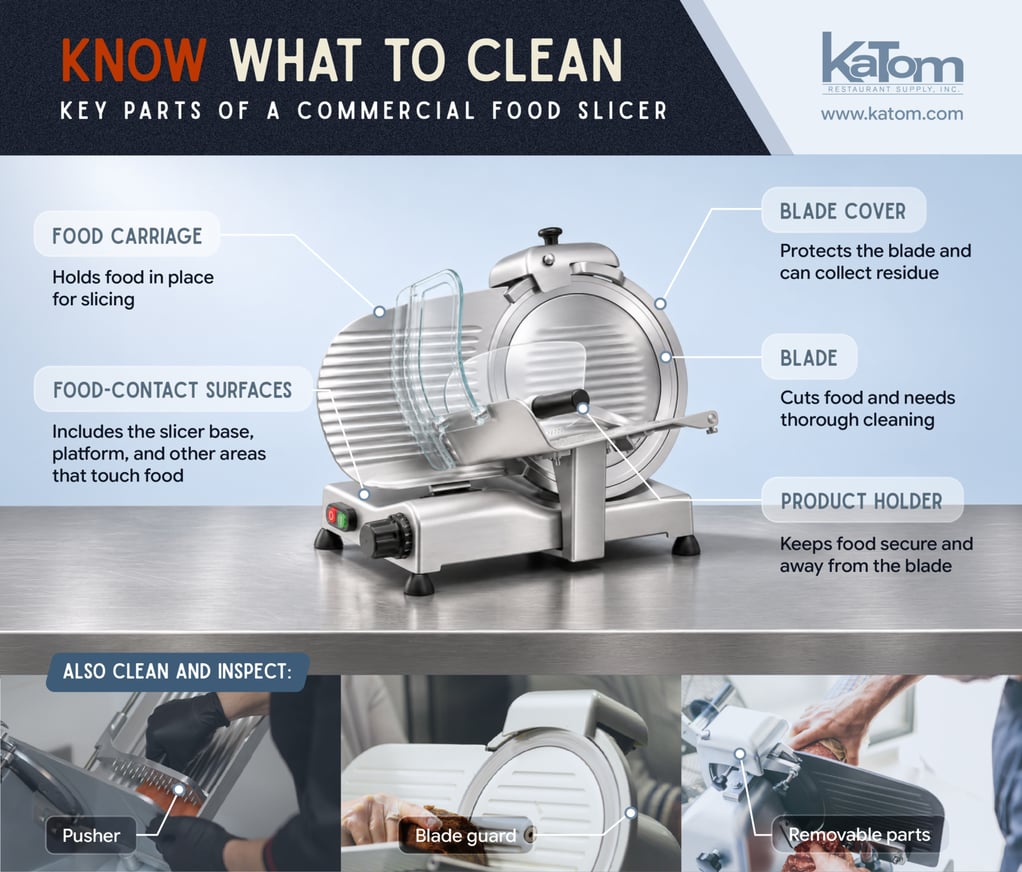
Commercial slicers may include removable parts that let operators clean difficult-to-reach areas. Depending on the model, these components may include the food carriage, product holder, blade cover, and other detachable parts. Cleaning these areas thoroughly helps prevent residue from accumulating in hard-to-reach locations.
How to Clean a Commercial Food Slicer
Cleaning procedures vary by model. Consult the owner's manual for instructions on shutdown, disassembly, approved cleaning products, sanitizing, and reassembly.
- Turn off and disconnect the slicer: Switch off the slicer and disconnect it from its power source as directed by the owner's manual. Confirm the blade has stopped moving before beginning any cleaning procedures. Never clean a slicer while it's operating.
- Remove detachable components: Remove the food carriage, product holder, blade cover, and other designated removable parts. Handle components carefully, especially those located near the blade. Use the protective equipment and manufacturer-specified blade-handling procedures. Don't remove parts that aren't designed for routine cleaning.
- Remove food debris: Clear visible food particles from the carriage, product holder, blade area, and surrounding surfaces. Use appropriate cleaning tools and avoid placing hands near the blade's edge.
- Clean and sanitize food-contact surfaces: Wash food-contact surfaces using an approved cleaning solution. Pay attention to areas where food particles and grease may collect, including the blade cover, carriage, and product holder. Rinse when required by the cleaning product's instructions, then apply a suitable food-contact surface sanitizer according to its label and applicable food safety requirements.
- Clean removable parts separately: Some slicers include features that make removal and cleaning simpler. "A removable knife tool makes slicer cleaning easier because the knife can be fully encased and cleaned separately in a sink or dishwasher," Hobart Food Machines Senior Sales Development Manager, Samantha Hanson, told KaTom. Follow the manufacturer's instructions for safe blade removal and confirm that components are dishwasher safe before washing them.
- Dry and assemble the slicer: Let cleaned components air dry or dry them as directed. Inspect parts for remaining residue or signs of damage before reinstalling them. Secure all components correctly before returning the machine to service.
How Regular Cleaning Helps Maintain Slicer Performance
Consistent cleaning supports food safety and the long-term condition of commercial slicing equipment. "A well-cleaned slicer supports both longer machine life and stronger food safety practices," Hanson said. Establishing a routine helps operators avoid missed cleaning steps and identify potential maintenance issues. Cleaning frequency should reflect food safety requirements, the types of food being sliced, and the slicer's usage frequency.
Frequently Asked Questions About Cleaning a Commercial Slicer
How often should a commercial food slicer be cleaned?
According to guidelines from the FDA, commercial deli slicers should be cleaned and sanitized at least once every four hours of continuous use and at the end of each workday. Follow applicable food safety requirements and the slicer's cleaning instructions.
Which parts of a commercial meat slicer need cleaning?
Common areas to clean include the blade and blade cover, food carriage, product holder, food-contact surfaces, and removable components. Check the owner's manual for model-specific disassembly and cleaning instructions.
Can commercial food slicer blades go in the dishwasher?
Some removable slicer components may be dishwasher safe, but this depends on the model and component. Verify compatibility before cleaning any part in a commercial dishwasher.
Should a slicer be unplugged before cleaning?
Yes. Follow the equipment's shutdown and disconnection procedures before cleaning. The blade must be completely stopped, and the machine must be made safe before cleaning or removing components.
How does cleaning help extend a slicer's service life?
Regular cleaning removes food residue and grease that can accumulate around components and interfere with operation. It also provides an opportunity to inspect parts for wear or damage.
What should operators do before using a slicer after cleaning?
Confirm all components are clean, all required sanitizing steps are complete, and parts are dry and correctly reassembled. Check that guards and safety features are properly positioned before returning the slicer to service.
Shop KaTom for Commercial Food Slicers
KaTom has been a trusted foodservice equipment supplier for more than 39 years. Shop a wide selection of slicers from leading manufacturers to find solutions that fit your operation's needs.
References
- Keep Commercial Deli Slicers Safe. U.S. Food & Drug Administration. Accessed October 2026.

