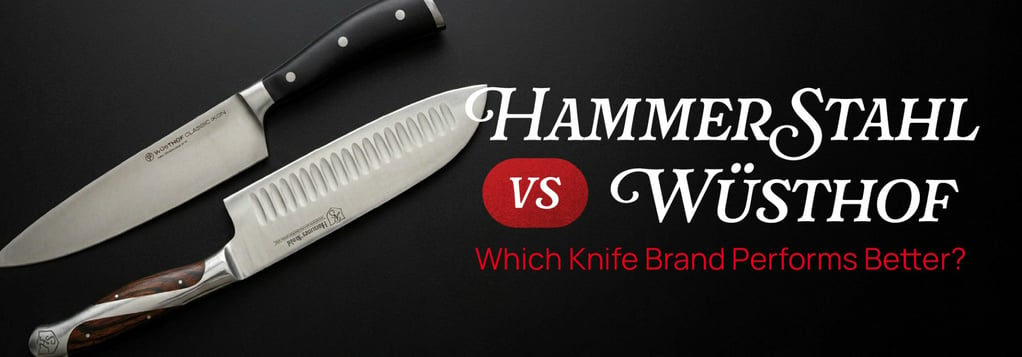
Hammer Stahl vs. Wüsthof
Hammer Stahl and Wüsthof produce high-quality knives known for performance and durability. Hammer Stahl stands out for its combination of quality and affordability, while Wüsthof is known for its long-term value and craftsmanship. Both brands deliver reliable performance, with the differences coming down to design and value.
Hammer Stahl vs Wüsthof: Comparison Snapshot
| Category | Hammer Stahl | Wüsthof |
|---|---|---|
| Overview | Value-driven brand that delivers durable forged construction, reliable performance, and simple maintenance at a competitive price point | Premium German knife brand known for exceptional craftsmanship, edge retention, and long-term performance in busy kitchens |
| Typical Price Range | $$$ | $$$$ |
| Strengths | Constructed of premium German steel; innovative quad-tang design; ergonomic Pakkawood handles | Exceptional durability; optimal balance; simple maintenance |
| Considerations | Blade depth can cause knuckles to contact the cutting board; thicker handles may increase hand fatigue for users with smaller hands; softer steel requires more sharpening | Heavy weight; full bolster can make sharpening more difficult; softer steel |
| Best For | Budget-conscious operations; general food preparation; small or startup businesses | High-volume operations; precision prep work; long-term knife investments |
About Hammer Stahl
Hammer Stahl's heritage dates to 1874 in Sheboygan, Wis., eventually evolving into New Era Cookware Company. After New Era acquired Hammer Stahl Cutlery in 2008, the brand expanded its line of forged kitchen knives and cutlery tools. Today, Hammer Stahl operates under the Heritage Steel family of brands in Clarksville, Tenn., offering German-steel cutlery and cookware products.
Key Strengths:
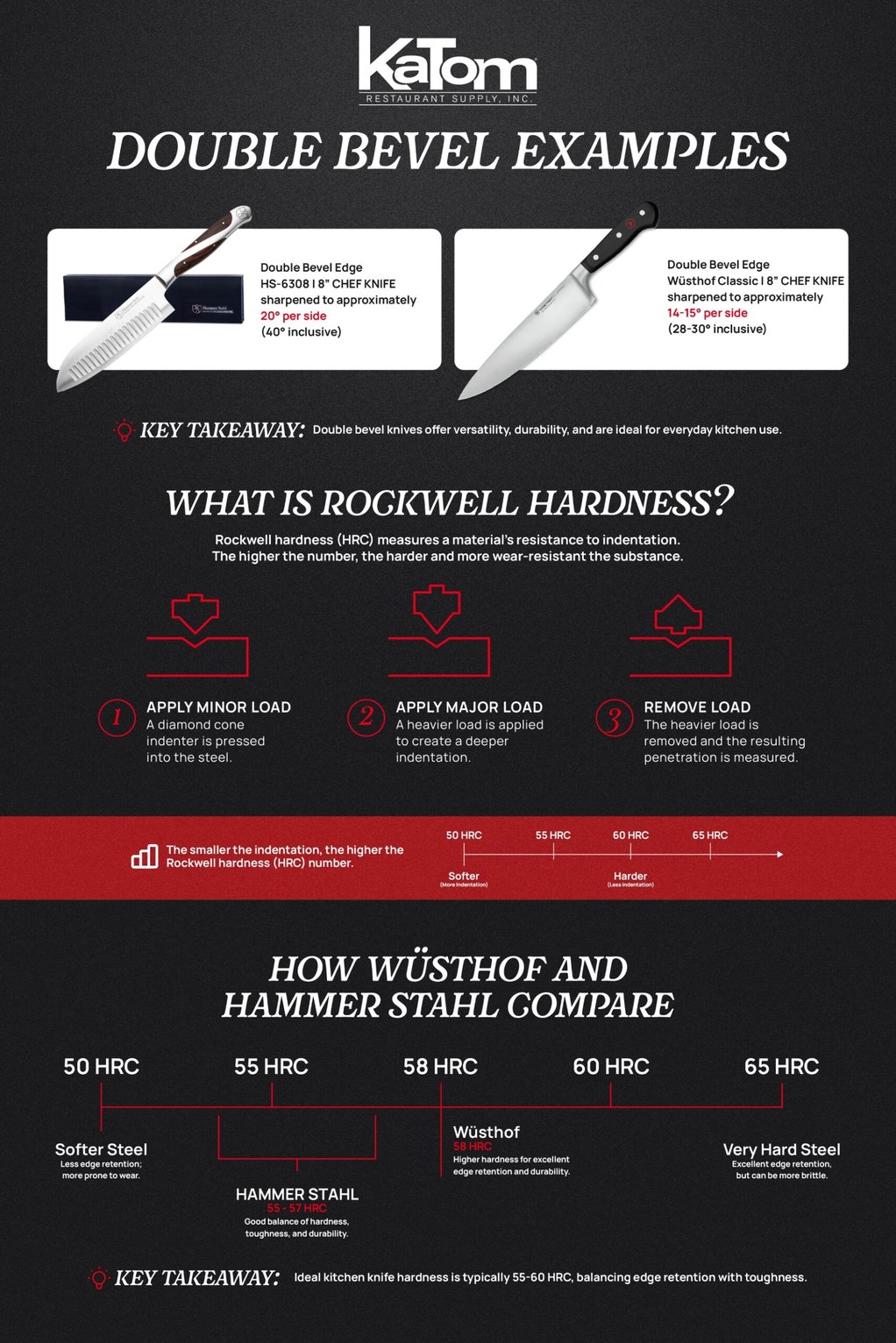
- Forged with high-carbon German stainless steel and tempered to a Rockwell hardness between 55 and 57
- Quad-tang design creates balance that reduces wrist fatigue
- Durable Pakkawood handles infused with resin support sanitary food preparation
About Wüsthof
Wüsthof traces its origins to 1814, when Johann Abraham Wüsthof established a steel and iron works company in Solingen, Germany. The company began expanding internationally in the late 1800s after a member of the Wüsthof family introduced its products in the U.S. Today, the seventh-generation family-owned business continues to manufacture forged knives in Solingen, selling its products in more than 80 countries.
Key Strengths:
- Proprietary German steel resists corrosion
- Durable steel rated at a Rockwell hardness of 58
- Full-tang construction adds strength to the knife
Key Differences Explained
Performance and Reliability
Forged with the same high-carbon German stainless steel as Wüsthof, Hammer Stahl knives resist dulling and maintain a sharp edge through repeated use. Hammer Stahl knives have a double-beveled edge sharpened to a 20-degree angle per side, enhancing durability and performance when slicing through hard cheese, tough vegetables, or thick meat. With a Rockwell hardness between 55 and 57, the blades remain flexible and resist chipping.
Known as workhorses in commercial foodservice operations, Wüsthof knives are constructed of high-carbon stainless steel and hardened to a Rockwell rating of 58. Blades are sharpened to a 14-degree double bevel, ensuring precision cuts. The full-tang design gives the knives weight and balance.
Design and Ease of Use
Hammer Stahl's quad-tang handle exposes steel on four sides of the handle, giving the knife weight and balance throughout meal prep. The stainless steel blade is rust resistant and simple to hone. The handles are constructed of moisture-resistant Pakkawood and infused with resin to prevent warping and cracking.
Wüsthof knives feature a single piece of forged high-carbon stainless steel. A full bolster enhances control and safety, while the full tang delivers balance and stability. Handles are triple riveted and constructed of a hygienic synthetic material that resists discoloration.
Maintenance and Durability
Hammer Stahl and Wüsthof knives are not dishwasher safe. Wash them with warm water and soap, then dry them immediately to prevent rust. Honing realigns the edge without removing metal and should be performed after every use. Sharpen the blades once or twice a year or as needed. Both brands offer blade sharpening kits and accessories.
Built to last, Hammer Stahl and Wüsthof knives feature high-carbon stainless steel blades and full-tang construction for exceptional strength and stability. With proper care and maintenance, either brand can deliver decades of reliable kitchen performance.
Price and Value
Hammer Stahl derives its value from premium materials and quality craftsmanship while using the same German stainless steel found in many Wüsthof knives. The unique quad-tang design redistributes weight, resulting in balance and a comfortable grip.
Wüsthof's value stems from its heritage, quality materials, and German craftsmanship. The brand's longevity and reputation for consistency have made it a strong choice among professional chefs for generations.
Which Knife Brand Is Right for You?
| Scenario | Best Choice | Why |
|---|---|---|
| High-Volume Operations | Wüsthof | Superior edge retention helps reduce sharpening frequency during daily use |
| Budget-Conscious Operations | Hammer Stahl | Delivers forged construction and similar premium materials as Wüsthof at a lower price point |
| Ease of Maintenance | Either | Hammer Stahl is easier to sharpen, while Wüsthof's harder steel retains its edge longer and requires less sharpening |
| Premium Performance | Wüsthof | Offers exceptional craftsmanship and long-term performance backed by a centuries-old reputation |
Shop Wüsthof at KaTom
As a trusted foodservice supplier for more than 38 years, KaTom offers a wide selection of Wüsthof knives to meet a variety of operational needs. Explore KaTom's selection to find the best fit for your operation.
