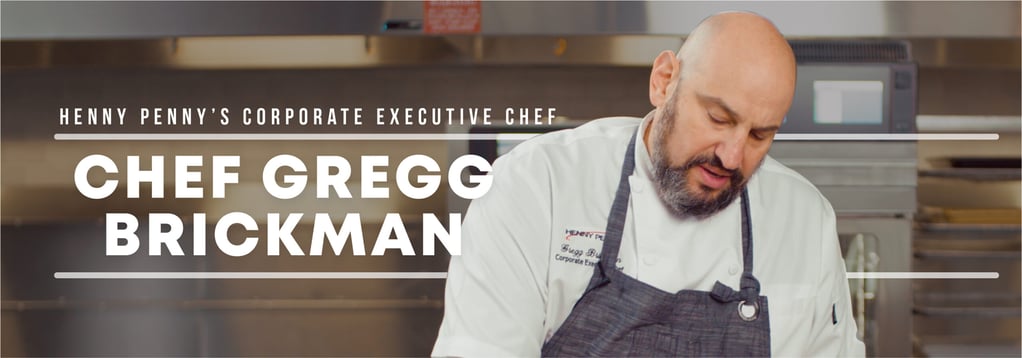
Who Is Chef Gregg?
Chef Gregg Brickman has worked at a lot of places and rubbed shoulders with some pretty big names. During his career, he managed to go from a high school catering company gig to corporate executive chef at Henny Penny – not to mention several exciting ventures in between. Wondering how he pulled it off? KaTom sat down with Brickman and got the inside scoop on where he's been, where he's going, and what makes him tick when it comes to foodservice.
Finding Foodservice: Love at First Sight
Although Brickman is now a powerhouse in his field, his introduction to the industry was a bit more humble. He fell in love with foodservice at an early age and began pursuing his passion without delay. At just 13 years old, he got his first behind-the-scenes glimpse of foodservice standing in a friend's kitchen as a hired catering company got to work. Watching staff members buzzing about in a form of organized chaos that belied the polished appearance of the dining room, he was hooked.
"I went inside the kitchen and was just mesmerized by everything that was going on," he explained. "I actually got a job with that caterer and worked with [them] up until after college, so probably 10 years.
"I've been working in restaurants either as a waiter, bartender, bouncer, busboy, dishwasher, cook, or chef ever since."
Learning to Embrace the Chaos
Through those early years, Brickman learned a lot, and not just about food. He learned how to pivot and adapt to new challenges at a moment's notice, realized the importance of teamwork, and discovered the joy of taking pride in his job every day. He embraced the camaraderie shared by hardworking kitchen staff and made long-lasting connections with his fellow foodservice workers.
"As I got older and more experienced, I really enjoyed mentoring younger cooks and younger chefs and building teams," he said. "You build a bond working with somebody for that many hours in a day, for that many days in a row, and you share something."
According to Brickman, the mercurial nature of foodservice just made him love it more, as goals and challenges evolved daily. While this potential for continuous growth may seem intimidating to some, to him it presented endless opportunities to perfect his craft. He felt stimulated by the daily quest to overcome obstacles and turn them into successes. Today, he remains just as motivated as he did back then, taking pride in his ability to exceed clients' expectations.
"You'll never see a chef go into the dining room when he had a bad night," he explained. "You always see a chef when they know they executed and delivered more than what they said they were going to deliver. They walk around and they greet people. They talk to people.
"I kind of take that into everything I do. I want to make sure that I'm able to go into that dining room, so to speak."
Working with Henny Penny
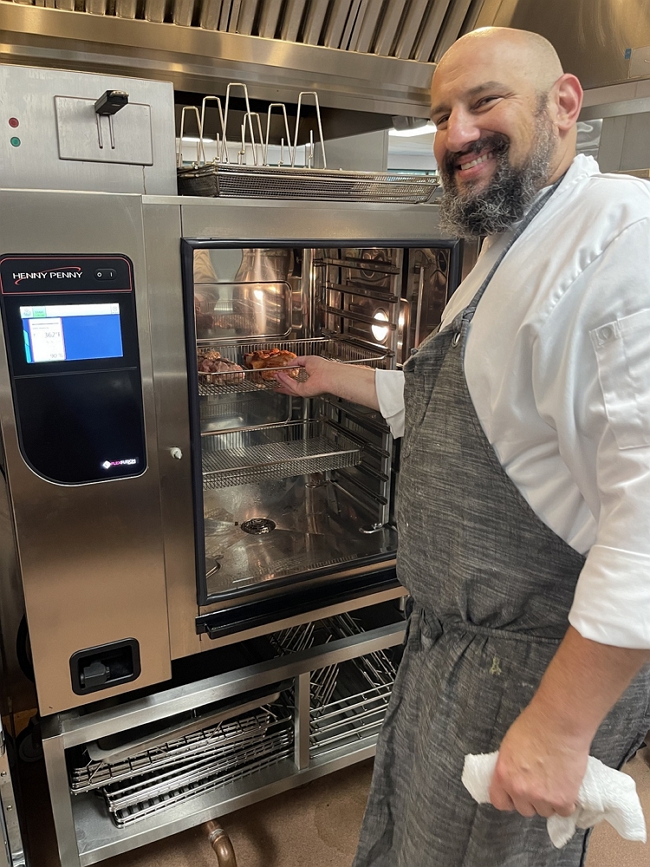
Brickman's work led to several opportunities over the years, but a twist of fate brought him to Henny Penny. He connected with other professionals at every stage of his career and always strove to leave them impressed with his knowledge and ability to help them reach their goals. When Covid hit and he was unexpectedly laid off, the connections he made through all of this hard work paid off in a big way.
The folks at Henny Penny remembered him – and they wanted him on their team.
"I worked with Henny Penny when I was with HOA Brands, and I built a great relationship with them. They reached out to me when they found out that I was no longer with HOA," he said. "I started the process with them to become their corporate chef … and it's been close to three years now."
In that time, Brickman has grown into the position in ways he never anticipated. Three years in he's still committed to continuous learning and finding new ways to push the envelope. He gives credit to the team at Henny Penny for supporting him every step of the way.
"I'm very fortunate. My direct supervisor is fantastic. The team that I'm on is great. Henny Penny as a company has allowed me to be the expert," he said. "They're allowing me to use my experience to guide this position and this department to become bigger and better than what it was before. My job has evolved from where it was when I was first hired to where it is today because of their ability to trust me to do the job that I was hired to do."
For someone so focused on continuously developing his knowledge and skills, the support and freedom he's been given to help him do that has come as an unexpected bonus.
"It's a rare company that allows somebody to do what they're good at with the trust and the amount of support that they've been able to give," said Brickman. "I feel very lucky that I'm able to be part of the team there."

What Does it Mean to be a Corporate Executive Chef?
"I'm the corporate executive chef (CEC). That means I have a team of chefs underneath me that work at the Henny Penny corporate office, as well as working with individual accounts or distributors to help them move their ideas across the finish line," Brickman explained.
Being a CEC brings many challenges, even to someone who knows their way around a kitchen. Scaling a concept that works for 10 servings up to 10,000 isn't a linear progression, and it takes someone with firsthand experience in all facets of the foodservice industry to anticipate and prevent the types of issues that often plague such large projects.
"It's a little bit different when you're doing something individually in a kitchen versus when you're rolling it out to a chain that has 500 restaurants," explained Brickman.
Because of the wide-ranging nature of tasks and deliverables he faces as a CEC, he's frequently shuttled around from one location to the next, observing and learning about many different regional cuisines and meeting new people along the way. The job can seem hectic at times, but adapting to these changing demands and exploring new ways of thinking, cooking, and operating can add valuable dimension to an already exceptional skillset.
"I have weeks that are always changing," said Brickman. "Just yesterday I was in Kuala Lumpur doing training for distributors… At the end of this week I'm working with a concept to help them do CLT, or central location testing. Next week I'm in town and I'm meeting with a bunch of concepts because we're going to be doing a diner round and we're looking at different concepts in restaurants that might work for their system."
"There are other weeks that I'm doing testing and ideation in my test kitchen in Atlanta. I also have a test kitchen up in Eaton, Ohio," he continued. "Each week is a little bit different. It's just a huge variety of stuff … that I could be doing any given day."
The Consultation Process
Operators utilizing Henny Penny's chef consulting services often find themselves receiving extra support from day one. Brickman, or a member of his team, travels with the sales reps to meet owners, review their existing operations, and brainstorm solutions to help them reach their business goals. This may entail one or more of a variety of solutions, including new equipment purchases, training on how to best utilize existing equipment, developing new recipes or processes, and more.
"It starts from the initial visit," said Brickman. "We'll meet with the culinary staff, and we'll ask questions that they might not really think about, because we're looking at it from a different point of view. We'll look at how the operation is running and where they might have opportunities or challenges that we can help address."
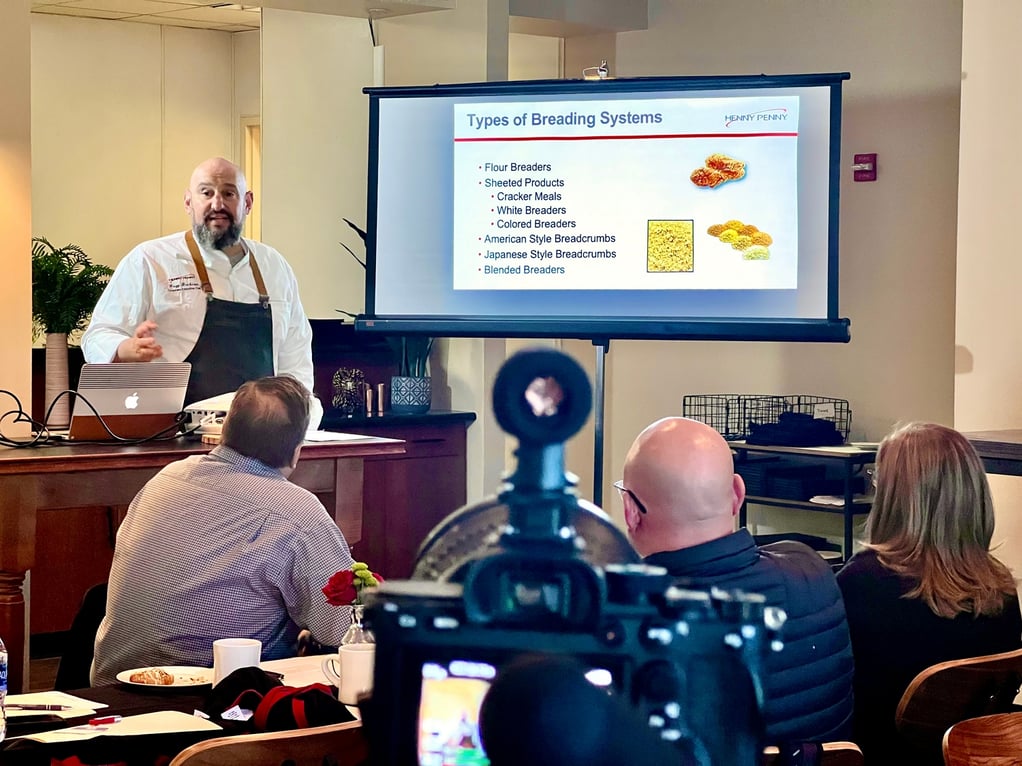
Once the team has identified actionable goals for clients, they continue offering support and guidance through the planning and testing phases to help ensure successful results. Establishing optimal workflows and operational methods at the outset leads to many positive results for businesses working with the Henny Penny team.
"We help validate by testing the food or the products in the equipment that we have … to ensure that their standard level is met," he continued. "We come up with white paper concepts, and if they like those we'll come in, cook with them, and show them different things that we've done in the fryers or in the combi ovens to make their experience easier and better for their customers.
"Because [owners] are coming to us, they're actually gaining something, whether it's an extended product life or faster cooking time, they're saving money in the long run."
Putting Expert Knowledge into Action
The benefits clients glean from working with Brickman and his team at Henny Penny sometimes manifest in ways owners didn't expect, such as streamlined workflows, simplified processes, or other small improvements that make a big impact.
Brickman recounted a recent experience he had helping a small restaurant chain resolve product quality issues that had them stumped.
"I was with a distributor and they asked me to go meet with a local chain. It's a small chain, I think they have 15 or so restaurants. It's fairly new. They were having issues," Brickman recalled. "Their chicken was too dark, and they couldn't figure out how to get the color down."
Using knowledge he gained from a recent event at the University of Arkansas, he was quickly able to pinpoint easy changes the owner could implement during the preparation stage and beyond.
"I came in and I walked them through a couple simple procedures where you just pop the thigh joint and you're now allowing the oil to get inside of it," said Brickman.
He reviewed their cooking process as well, and was able to give them additional guidance on adjusting the temperature at which they were cooking their chicken to produce a more visually appealing product.
"In a short amount of time, maybe an hour, hour and a half, we changed their entire procedure on how to do their chicken," he continued. "Just having that extra knowledge, you're able to make some small changes with a huge impact."
How Do Henny Penny Clients Benefit?
There are hundreds of unforeseen issues that can arise when planning and creating a concept, as well as when established concepts develop and implement new recipes and cooking methods, open additional locations, or make other top-down business decisions affecting operations on a broad scale. Because of his extensive, wide-ranging experience with nearly every aspect of foodservice and foodservice management, Brickman is uniquely positioned to identify and resolve such issues before they derail a project.
"A lot of people have great ideas, but they don't know how to get there," said Brickman. "My role at Henny Penny is to help concepts or individuals do that, because I have a background with fine dining as well as chain accounts and doing R&D. I've had a lot of success working with larger restaurants to help them come up with concepts, put those concepts to paper, and then create them and test them."
Working with Clients
Brickman follows a no-nonsense approach when it comes to advising clients. In his opinion, it's much more harmful to agree with bad ideas just to keep a client happy than it is to be honest and keep them grounded in reality from the start.
Brickman says with him on the team, "You're going to get a non-biased opinion or feedback on how the product may look or sit with the concept.
"Fortunately or unfortunately… I'm not one to sugarcoat things," he explained. "If I don't think something's going to work, I'll say it. Ultimately, it's [the owner's] final decision. But if I'm there, they want my opinion, I'm going to give it to them."
With his unique position, Brickman doesn't have to worry about sales numbers or commissions. His job is to help Henny Penny clients be the best versions of themselves, and sometimes that actually means spending less, not more.

"I've gone and told concepts 'This might be too much equipment for you. This isn't going to work best for you,'" said Brickman, adding that this honesty-first approach helps build a level of trust with business owners and helps put them at ease. "They know that they can call and get a straight answer," he continued.
"There are a lot of people who are going to yes you to death, and you learn, sometimes the hard way, that those aren't really the best people to have surrounding you. You want somebody who's going to be honest with you and be on your side to help you when you find a concept."
Although he isn't afraid to be honest with clients about their ideas, he hasn't made a career out of saying no. In many cases, the answer is more accurately "not quite" or "not yet." Even concepts that start out riddled with flaws can be turned into something flawless with the right assistance, and Brickman says he's always ready to help clients refine their rough ideas into something that can and will serve their business well. He's not afraid to nix unsound execution strategies, but he's always ready to help clients find a new way to reach their goals.
"You might not have the right solution now and it might not work, but the idea is there and [we can] try to figure out ways to get that to reality and get that to the table," Brickman said.
"I think that's an important step, for chefs and R&D people to work together to get that final decision. It's way too easy to say 'no, that's not going to work'. You have to put work into something to say, 'yes, the concept is there, but the process isn't yet. Let's work on the process'."
Brickman believes the work he and his team do has added a great deal of value for Henny Penny clients. He enjoys teaching and helping people and feels the program has been great for helping business owners solve problems and streamline their operations.
"Helping people put plans into action and in developing concepts is something that I grew into. It kind of organically happened," says Brickman. "I can see the bigger picture and I can see what the strengths and weaknesses are with different concepts and what might work for something.
"It's been very successful, and I've enjoyed my time doing it with a lot of different concepts."
Advice on Cooking Up Success
They say if you do what you love, you'll never work a day in your life – but Chef Gregg disagrees. The culinary field is fiercely competitive, and no matter how much you love cooking, success in this industry takes hard work. In his opinion, cooks who embrace the challenge and are willing to do whatever it takes have the best shot at success.
"You can choose the pain of discipline, or you can choose the pain of regret," said Brickman. "Which one do you want? … Either way there's going to be a pain. You just choose which pain is right for you."
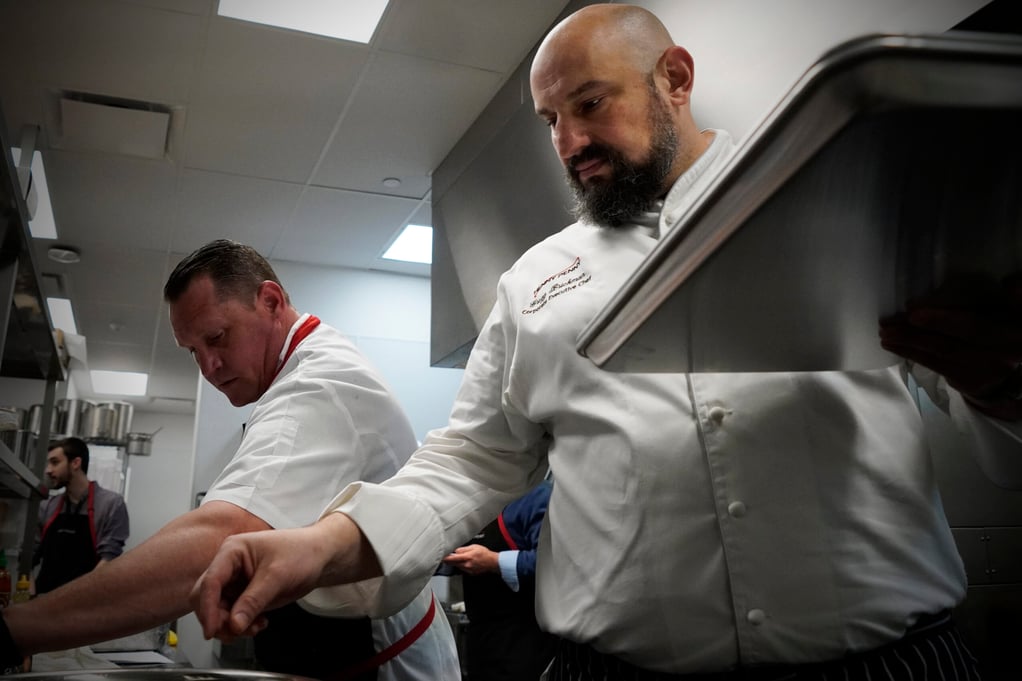
He believes cooks who are committed to integrity, accountability, and remain lifelong learners will go the furthest professionally. Taking accountability for your mistakes builds trust with team members and makes it easier to move forward with a better course of action. It takes effort and commitment to continually seek out new knowledge and expand your skills. But for those eyeing a long-term career in foodservice, there are no shortcuts to success.
"I think the people who are successful in this industry are the ones who are willing to give back and willing to expand their own knowledge and become better every single day. Those are the people I try to surround myself with, and those are the people I encourage my team to surround themselves with," said Brickman.
"Own your mistakes, deliver more than you promise, and always learn something new, because those three things will bring you into the right position and give you the right opportunities."
Advice for Operators: Keep it Simple with Clear Concepts
Despite all the hardships faced by those in the restaurant industry in recent years, market forecasts still indicate opportunities for growth and success for those who remain. When it comes to operating a foodservice establishment, successful businesses will need to stay ahead of the curve and shift contemporary marketing tactics to really stand out. Based on his deep involvement in the industry and years of experience, Brickman has some advice for operators on how to succeed in today's foodservice landscape: "Consistency, consistency, consistency."
"Before COVID, everybody was trying to be everything to everybody. You could come into a restaurant and get every single type of food there was, but that's not what they were best at," he recalled. "One of the takeaways from COVID [was that] people started to reduce their menus to go to their core, and they saw something happening. People were coming to them more often because the food was better, more often, more consistently."
Brickman believes restaurants that lean into their concept and branding end up attracting more and more devoted customers. Those that try to gain more market share by bulking up their menu in an attempt to appeal to all customers, all the time, often end up losing much more than they gain.
"All these concepts that are trying to be everything to everybody, they're always trying to redevelop themselves because you don't know who they are anymore. They have no identity," he explained. "If you're looking to get a certain demographic into your restaurant and you have to change who you are to get that demographic in, you're losing your identity. You're not who you were anymore."
"Figure out what your restaurant does best and then become the best at it. Make it the best you can be," he advised. "Stick with what you're good at. You're going to build that base of customers and internally you're going to have a lot of proud employees because people are going to say, 'Hey, we're the best at this,' versus saying that 'We're OK at this'."
