The History & Craft of Pizza Making
Like many popular foods, pizza didn't have one inventor or a recorded creation date. Instead, it gradually developed through cultural traditions, family recipes, and working-class meals. Today, pizza restaurants abound in Italy, the United States, and around the world, with many regions claiming a distinct version of the dish.
A Roundabout History
Egyptians, Romans, and Greeks ate flatbreads that resembled modern-day focaccia with minimal toppings.1 An early example appears in a still life fresco painted more than 2,000 years ago. Uncovered in Pompeii, it depicts a round bread topped with several ingredients thought to be fruit and spices.2
The recognized birthplace and home of traditional pizza is less than 30 miles north of Pompeii: the port city of Naples. Among the largest European cities for much of its existence, Naples had a massive working class in the 18th century that needed cheap, easy-to-eat food.1 At the same time, tomatoes, which were introduced to Italy in the 16th century, became more frequently used and provided an inexpensive source of nutrition.3 The result was street vendors selling a round, tomato-topped flatbread known today as pizza.
Over the years, recipes were perfected and ingredients were gathered to create distinct Neapolitan-style pizzas. Pizza Margherita is made with a simple dough and topped with San Marzano tomatoes, buffalo mozzarella, and fresh basil leaves, while pizza Napoli features the same base with anchovies and other spices.
In the late 19th century, a wave of European immigrants traveled to the United States, bringing their food and culture with them. The first Neapolitan pizzerias to open in the United States were in New York, Trenton, N.J., Boston, New Haven, Conn., and other Northeastern cities. During the 20th century, pizzerias spread across the nation, with pizza eventually becoming one of the most consumed dishes in the United States. By 2020, more than 11 percent of Americans ate pizza on a given day.4
"Pizza is bread… If you cook the bread right, the toppings will fall into place. So, if you understand the hydration, the fermentation, all the basics of what bread making is, then you can develop whatever style of pizza you want." — Vitangelo Recchia, Owner of Bella Napoli Pizzeria
Developments in Pizza Equipment
Pizza operations fit into every category from fast food to fine dining, using everything from traditional tools to modern culinary innovations. Finding the right pizza equipment is essential for maintaining efficient production and creating consistent, delicious pies.
Pizza Ovens

Neapolitan pizzas are traditionally baked in large wood-fired brick ovens, heated to extremely high temperatures that quickly crisp the thin crusts. Creative chefs also use these ovens for more than pizza. "Those ovens get up to 900 degrees," Recchia told KaTom. "You can bake bread in it, you can do vegetables, you can do proteins."
When gas ovens were first introduced, they made pizza cooking more accessible for a wider range of shops. Modern gas deck ovens often stack several chambers high, providing an efficient use of space with the same high-heat, stone-cooking approach. Electric countertop pizza ovens have a small footprint that benefits areas with limited space, such as bars, pubs, or concession stands.
Conveyor ovens have made pizza baking even more efficient, using impingement technology to bake pizzas quickly and thoroughly without constant monitoring.
Prep Equipment
Creating dough requires heavy-duty equipment, making reliable spiral mixers essential in modern pizza establishments. Mixers from brands like Hobart and Eurodib are known for consistently mixing tough dough. "My dad still has a Hobart from 1940 and it's a beast," said Recchia, whose father has operated a pizzeria for 50 years.
Commercial smallwares are available for every kind of pizza, making it easy for operations to craft multiple pie styles. These include wooden or metal pizza peels, pans, screens, and proofing boxes. Pizza cutters can be rollers and rocker knives for quick and efficient cuts.
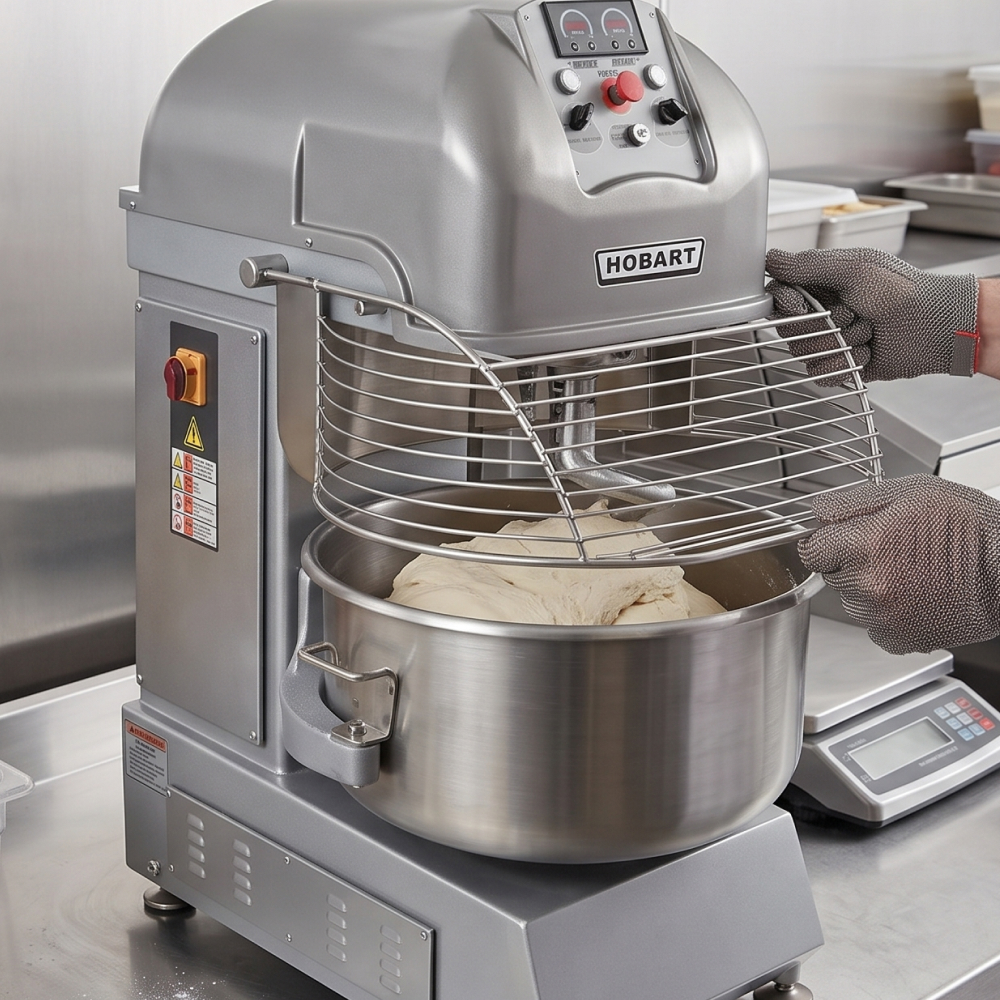
Modern dough equipment is designed for consistency and efficiency. Recent innovations include automatic dough dividers and pizza stretchers. The Marra Forni manual dough stretcher and the Opera Prima automatic stretcher, which can stretch 200 pizzas an hour, work well in high-volume operations and support staff with limited training.
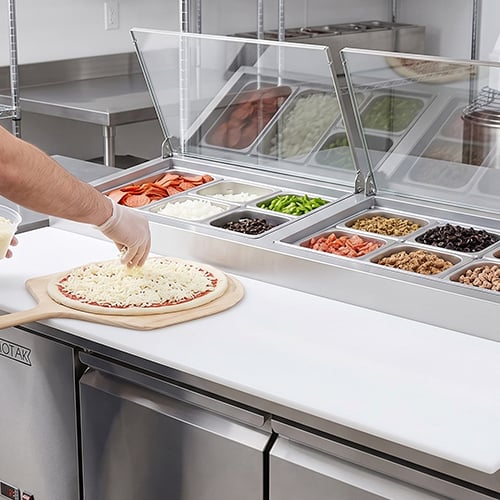
Prep tables are also essential for efficient service, keeping pizza sauce, cheese, and toppings at safe temperatures in one accessible place. Recent innovations include Hoshizaki's PR67B-Z pizza prep table, which won a spot in the 2026 Kitchen Innovation awards. It features refrigerated catch trays and an updated hood capable of keeping ingredients and sauce fresh overnight.
Shop Pizza Equipment at KaTom
Pizza equipment is designed to improve quality, consistency, and efficiency in pizza production, helping pizzerias create the best product for their customers. From large pizza ovens to prep tools and production essentials, shop KaTom to outfit your pizza operation today.
Pizza Equipment FAQs
How do you choose the right oven for different pizza styles?
Pizza oven styles include wood-fired, rotating rack, deck, countertop, impinger, and conveyor ovens. Determine your preferred style of pizza to find the oven that achieves the best results. Then, consider factors such as output, cost, available space, and utilities.
Which pizza styles require the highest baking temperatures?
Neapolitan-style pizza requires the highest temperature. It's baked in ovens between 750 and 900 degrees Fahrenheit. New Haven-style pizza is also cooked at a high temperature, typically around the same range.
What are the best ovens for traditional Neapolitan pizza?
Wood-fired ovens are the best option for Neapolitan pizzas, though gas brick ovens provide nearly the same results and may suit certain installation requirements better.
What kinds of ovens work best for New York-style pizza?
New York-style pizza can be cooked in brick ovens or deck ovens with stones to create a crispy underside. Conveyor ovens can also be used when high-volume production is needed.
Can conveyor ovens be used for any pizza style?
While impingement conveyor ovens simplify pizza cooking for most styles, many pizzaioli prefer using wood-fired brick ovens for Neapolitan-, New Haven-, and New York-style pizzas to develop a distinct crust texture and lightly charred flavor. Conveyor ovens are best for high-volume pizzerias and fast-casual operations prioritizing consistency and efficiency.
Resources
- Who Invented Pizza? History.com. Accessed July 2026.
- IX.10.1 Pompeii Samnite House Later Converted to a Bakery. PompeiiInPictures. Accessed July 2026.
- How the Tomato Grew Into Italian Cuisine. Italian Sons and Daughters of America. Accessed July 2026.
- Pizza Consumption in the U.S. What We Eat in America, 2017-2020 study. Accessed July 2026.
