Lenox vs. Oneida Flatware
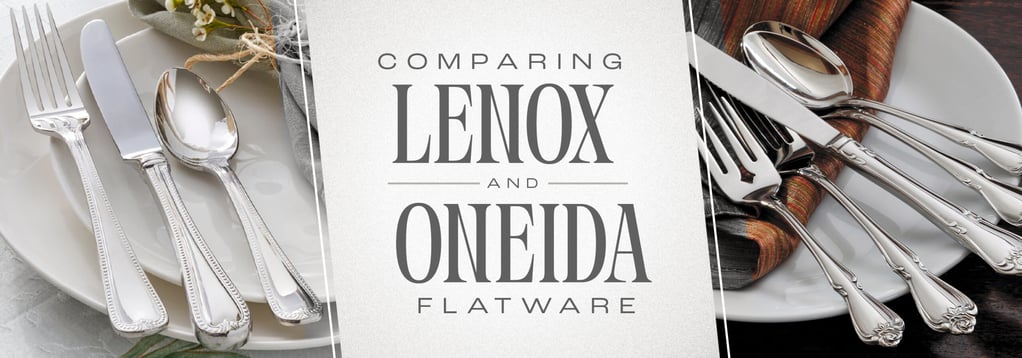
Lenox and Oneida both offer numerous flatware patterns for various table settings. While Lenox offers direct-to-consumer shopping and complete sets, Oneida focuses on additional finish and design options for tabletop presentations.
Lenox vs. Oneida: Comparison Snapshot
Lenox and Oneida produce a mix of unique and traditional flatware designs, with some overlap in patterns. While Oneida is preferred in fine dining settings, Lenox suits upscale residential use.
Shop Now
About Lenox
Lenox Corporation was founded by Walter Scott Lenox in 1889 as the Ceramic Art Company. Originally selling hand-painted china, the company became one of the leading china dinnerware manufacturers in the United States, even providing china tableware for President Woodrow Wilson. Lenox Corporation's cutlery options span a wide range of consumer brands.
Additional Features:
- Decorative dessert-service sets
- Wood caddies available with certain patterns
- Colored and engraved flatware designs
About Oneida
Founded in 1880, Oneida offers more than 60 premium flatware patterns designed for various dining settings. The commercial Oneida line is part of the 1880 Hospitality portfolio, alongside Sant’ Andrea and Luzerne. Lenox Corporation owns Oneida Consumer LLC, which offers Oneida products for residential buyers.
Additional Features:
- Select patterns include ornate, brush, and satin finishes
- Available models include 18/10, 18/8, and 18/0 stainless steel
- Silverplate coating available by special order on select patterns
Key Differences Between Lenox and Oneida
Selection and Notable Designs
Lenox offers accessible flatware designed for simple, elegant service in consumer settings. Among the brand's popular collections, Portola offers ergonomic handles with flared edges and a beaded pattern at the base. These pieces come in a mirrored finish with matching steak knives and serving utensils. The Butterfly Meadow pattern provides a more decorative approach, offering butterfly and flower designs and painted porcelain handles for a lively feel.
Oneida's patterns suit a wide range of themes, from minimalist designs to elaborate engravings. One of the most decorative models is the Michelangelo pattern, featuring ornamental handle piercings and engravings on the flatware bowl. Satin Astragal offers a more understated design with architectural bands and a matte handle finish.
Materials and Construction
Most Lenox flatware is made of 18/10 stainless steel, which contains 18 percent chromium and 10 percent nickel for strong corrosion resistance. The brand's patterns primarily feature a mirror, satin, or hammered finish. Patterns like Colebrook feature stainless steel with an onyx PVD coating, providing a durable black coating for everyday use.
Oneida produces 18/10, 18/8, and 18/0 stainless steel flatware for varying levels of durability. Some of Oneida's 18/10 flatware is available with optional silver plating to fit premium table settings. Other specialty options include satin bead-blasted finishes, which have a matte texture, and Oneida Relic™ finish, featuring a weathered, organic appearance.
Durability and Maintenance
Most flatware from Lenox and Oneida is dishwasher safe and can handle repeated use in high-volume settings. Some models, however, such as Lenox Opal Innocence and Oneida Satin Astragal and Oneida Stiletto, aren't recommended for dishwasher cleaning.
Price and Value
Both brands offer mid-range pricing for entry-level and higher-end flatware. Most Lenox patterns are sold as complete flatware sets, with coordinating service pieces. Oneida typically sells individual items by the dozen, simplifying bulk purchasing.
Which Brand Is Better for Your Needs?
When it comes to commercial settings, Oneida offers more variety in materials as well as unique shapes and finishes. Lenox sets are positioned to support long-term use in low-volume settings, upscale cafes, or private entertaining.
Shop Oneida at KaTom
KaTom offers flatware from Oneida at competitive prices. Choose the ideal silhouette, finish, and size to complete your tabletop setting with Oneida flatware.
Shop Now
