Foodservice Gloves Guide
Disposable foodservice gloves support safe, efficient food handling in commercial kitchens. Available in several materials, each type offers different levels of durability, protection, flexibility, and comfort. Choosing the right glove depends on the task, from assembling sandwiches to handling raw meat or completing cleaning duties.
Material plays a major role in glove performance, affecting durability, tear resistance, and hand fit. Some gloves offer a snug, flexible feel for better control, while others are designed for quick changes during fast-paced service. When handling latex sensitivities, selecting latex-free materials such as nitrile or vinyl helps reduce the risk of allergic reactions.
This guide breaks down common disposable glove types and highlights their key features. Compare material, best use, durability, and fit to find the best gloves for your workflow.
Nitrile
Nitrile gloves provide a durable option for foodservice workers who need strong barrier protection and a secure fit. Made of synthetic rubber, they resist punctures better than many other disposable gloves and hold up well during longer prep tasks. Their close fit and textured surface also make them a practical choice for handling raw proteins, greasy ingredients, and cleaning chemicals.
Key Features:
- Material: Synthetic rubber
- Best For: Handling raw proteins, oily foods, and cleaning tasks
- Durability: Puncture and chemical resistant
- Fit and Feel: Form-fitting with a slightly textured surface
- Considerations: Less breathable than some alternatives and not biodegradable

Vinyl

Vinyl gloves are a cost-effective choice for short, low-risk food handling tasks. Made of PVC, they're suited for duties that require frequent glove changes, such as assembling cold foods or completing light prep work. Because they fit more loosely than nitrile or latex, they're easy to put on and remove, though they don't provide the same level of durability or flexibility.
Key Features:
- Material: PVC plastic
- Best For: Short-duration food prep, sandwich assembly, and frequent glove changes
- Durability: Moderate; less resistant to punctures and stretching than nitrile
- Fit and Feel: Smooth texture with a looser fit
- Considerations: Less flexible than nitrile or latex and not suitable for heavy-duty tasks
Polyethylene (Poly)
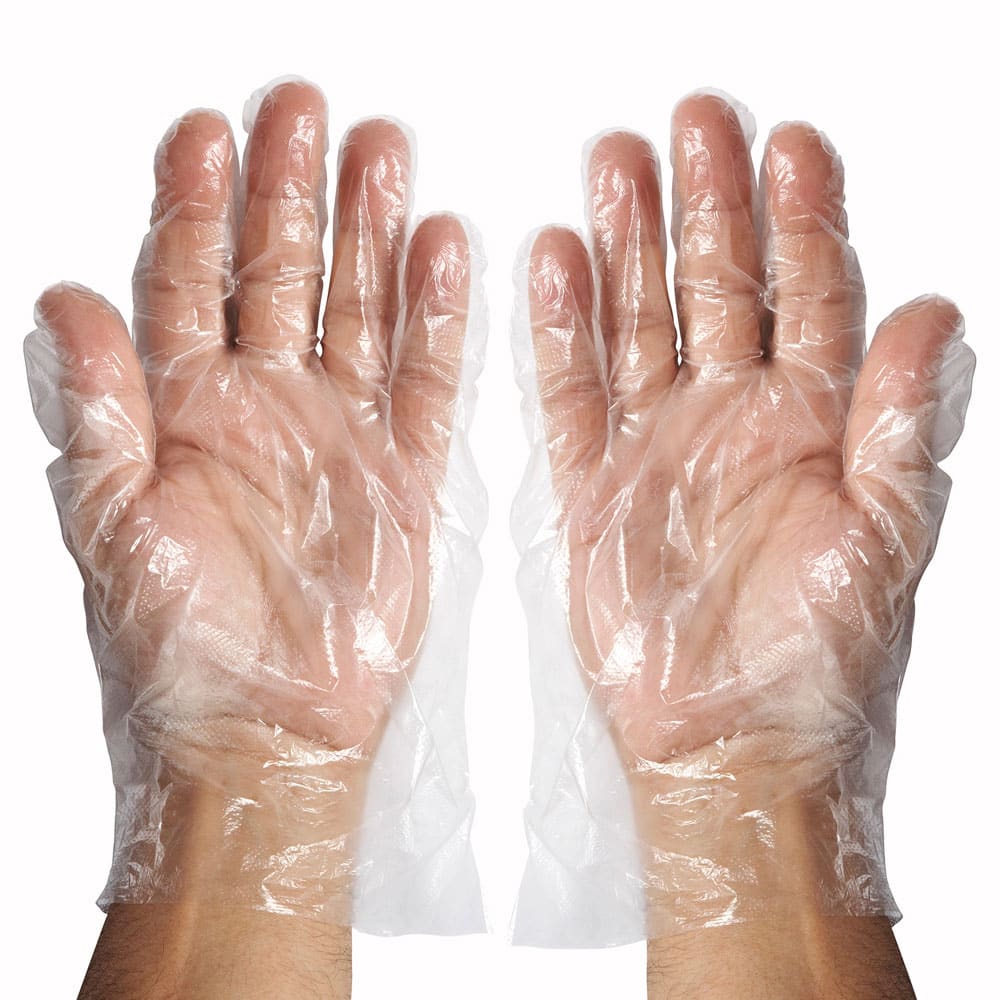
Poly gloves are lightweight, loose-fitting gloves commonly used for quick food assembly tasks. They work well for handling dry ingredients, baked goods, or ready-to-serve items. Because they are thin and inexpensive, poly gloves are practical for high-volume service and frequent glove changes, but they aren't designed for jobs that require precision, heat resistance, or extended wear.
Key Features:
- Material: Plastic
- Best For: Food prep and assembly and dry food handling
- Durability: Lower puncture resistance than nitrile or latex gloves; not intended for heavy-duty tasks
- Fit and Feel: Loose, comfortable fit with a smooth texture
- Considerations: Can melt around hot food or equipment and tears easily
TPE

TPE gloves offer a middle ground between traditional poly gloves and more form-fitting materials. Made of thermoplastic elastomer, they offer more stretch and a closer fit than poly gloves, making them useful for fast-paced foodservice settings such as sandwich stations, takeout operations, and buffet lines. While more comfortable than some basic plastic gloves, they're still best reserved for light-duty tasks.
Key Features:
- Material: Thermoplastic elastomer (flexible plastic)
- Best For: Ready-to-eat food, fast food service, and buffet kitchens
- Durability: Low to moderate; not suited for heavy prep
- Fit and Feel: Snug, elastic fit with a slightly textured surface
- Considerations: Can melt around hot food or equipment and may develop holes during extended use
Latex
Latex gloves are known for their flexibility, comfort, and close fit. Made of natural rubber, they provide strong tactile sensitivity, which helps staff maintain control during detailed prep tasks. Latex gloves are often chosen for jobs that require dexterity, though operators should consider potential allergy concerns before using them in the workplace.
Key Features:
- Material: Natural rubber
- Best For: Detailed prep tasks that require flexibility and hand control
- Durability: Strong stretch resistance with good puncture protection for general food prep
- Fit and Feel: Soft, flexible, and form-fitting
- Considerations: May cause allergic reactions for some users or guests

Hybrid

Hybrid gloves combine features of different glove materials to create a budget-friendly option for light food handling. Depending on the construction, they may offer more flexibility than basic poly gloves while still supporting quick changes during service. These gloves are best for simple, short-duration tasks rather than demanding prep or cleaning.
Key Features:
- Material: Blended plastic-based materials
- Best For: Light food handling and quick-service applications
- Durability: Low to moderate
- Fit and Feel: Usually lighter and more flexible than standard poly gloves
- Considerations: Performance varies by product and won't handle heavy-duty tasks
Disposable Gloves FAQs
Are nitrile, vinyl, and latex gloves food safe?
Yes, these gloves can be food safe when labeled for food handling and compliant with FDA standards. However, latex isn't recommended due to allergy risks.
How often should gloves be changed?
Gloves should be changed between tasks, after contamination, when damaged, and at least every four hours during continuous use.
When must a food handler wear single-use gloves?
Food handlers must wear single-use gloves when handling ready-to-eat foods to prevent contamination.
Which gloves are safe to use with cleaning chemicals?
Nitrile gloves are highly resistant to chemicals, oils, and cleaning agents. Vinyl gloves offer limited resistance, while latex gloves provide only moderate protection and may degrade with certain chemicals.
Shop KaTom for Disposable Foodservice Gloves
KaTom offers foodservice gloves in a variety of materials, sizes, and case quantities to support prep, service, and cleaning tasks. Whether you need a durable glove for back-of-house prep or a cost-effective option for quick changes during service, you'll find numerous glove options suited to your workflow and budget.
