Piping with Pastry Tips

With the right tools, a professional cake decorator can turn a simple dessert into a work of art. Some of the basic tools of that trade are cake decorating tips, the metal nozzles inserted into the end of a pastry bag that shapes the frosting as it is squeezed out. Below are some of the most common types of pastry tips and their uses.
Necessary Supplies
While the cake decorating tip is what the frosting comes out of and determines its shape, there are some other essential pieces you'll need in order to use them. The pastry bag holds the frosting and, depending on the type of tip you have, may be all you need in addition to the piping tips. Some cake decorating tips with large bases can be placed directly in the pastry bag, since the wide base will hold them in place.
Decorating tips with wide bases require fewer pieces, but many professional bakers prefer to use their smaller counterparts, which require a plastic coupling that attaches the tip to the bag. These are preferred because the coupling gives you the ability to easily change tips without needing to change out bags of frosting.
Piping Tip Shapes
The shape of the opening on a pastry tip determines the shape of the frosting that comes out of it. Of course, once you've squeezed out the frosting, how you manipulate it can make some shapes very versatile. Below are some of the common tips and the designs they can create.
Open Star Tips
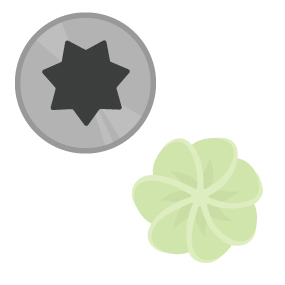
Open star tips have triangular teeth around the opening, creating sharp ridges in the frosting as it emerges. These tips vary in diameter as well as in the number and size of teeth included. Depending on how the decorator uses it, this tip can create ruffles, shells, star- or flower-shaped gems or dollops, and ruffled borders. Very thin open star tips can also be used for lettering.
Closed Star Tips
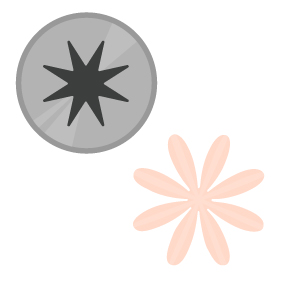
Closed star tips are very similar to open star tips, except that the triangular tips are curved inwards, creating a far deeper and more defined ridge in the frosting. These tips are often used for ruffles, shells, stars, and borders. Because of the more dramatic ridges, these tips are usually not used for lettering.
Round Tips

As the name suggests, round tips have a smooth, round opening. Their simplicity makes them incredibly versatile, so they are available in a wide range of sizes. Smaller round tips might be used for swirls, lettering, swiss dots, and other line work. Larger tips might be used for large dots, swirled cupcake tops, and for quickly covering cakes in a base layer of frosting.
Ruffle Tips
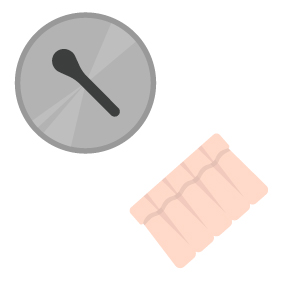
Ruffle tips have a triangular opening at the tip, with a long, thin opening continuing down the side of the tip. Because this tip can only create ruffles, its use is a bit limited, but decorators use them to create borders, garlands, and ribbons.
Petal Tips
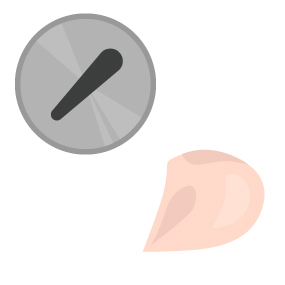
Petal tips have an oblong opening that is thicker on one end than the other and are also sometimes curved. With the right twist of the wrist, decorators can use this tip to make a variety of petal shapes, ruffles, and draping swags.
Leaf Tips

Leaf tips also have an oblong opening, but are pinched in the center to give the appearance of a stem in the frosting. These are generally only used for leaves, but depending on its shape, this tip can create leaves with smooth or ruffled edges.
Basketweave Tips
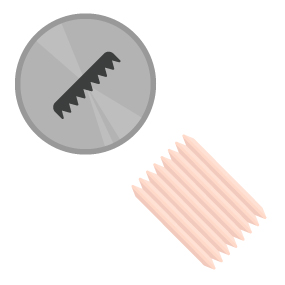
The basketweave tip has an oblong opening that is smooth on one side and toothed on the other, creating a wide textured design. It is mostly used for woven designs, but can also be used for swags and textured borders.
Specialty Tips

Specialty tips are generally used for one specific design. The most common types of specialty tips are flowers, which have intricate petal shapes stamped into the tip opening.
